

Nathalie Schneitter: "E-racing is not yet accepted.
The "E-Tour du Mont Blanc" is the toughest thing you've ever done on an e-mountain bike. How useful is it to hump heavy pedelecs over mountain passes?
The "E-Tour du Mont Blanc" is indeed the craziest thing I've ever done on a mountain bike. However, the race is not suitable for the masses and was therefore limited to 20 teams. I still thought the event was a success, as it redefined my limits of what is possible and proved that the e-mountainbike can be put to good use, especially when the "organic biker" can only push.
Do e-mountain bike races also have tourism potential?
E-mountain biking in itself has huge tourism potential. However, I see e-racing more as a beacon that can and must dust off the e-mountainbike. Fun and enjoyment certainly have greater touristic potential with e-bikes than the desire to compete.
I see the future for the e-mountain bike where the organic bike reaches its limits: for example, on technical climbs that are so difficult that they cannot be mastered without the additional power. Whether this will be E-Cross-Country or E-Enduro or a new racing format remains to be seen.
What does the perfect e-mountain bike race look like for you?
I've always been a big fan of technically difficult terrain, and I am and will always be a cross-country rider at heart. That's why a challenging e-cross-country is my personal favorite. However, I believe that e-enduro with uphill and downhill stages is more in tune with the times.
Do race organizers now have to offer e-mountain bike races in order to remain attractive?
That will probably take a while yet. E-mountain biking is becoming more and more socially accepted, but e-racing is not quite there yet. I could imagine that the Swiss marathons will soon offer an e-category. But probably without timekeeping, as the effort required to carry out technical checks on large starting fields is still far too great at the moment.
The way the UCI jumped on the e-train at short notice seemed like a helpless move to avoid losing touch. Isn't there a danger that the sport will disappear into oblivion again?
This danger does indeed exist. That's why I think it's extremely important to listen to the athletes, especially when it comes to track design, in order to guarantee attractive competitions. E-racing can be a great thing if the track is right for it. Now it is important to take the right steps so that the young sport can grow in the right direction.
You have dealt intensively with the energy development of the Bosch engine. What did you learn?
I had to throw many of my own convictions overboard and learn about e-racing from scratch. For example, I initially thought that I absolutely needed an e-hardtail to ride races. But I quickly realized that the difference in weight between hardtails and trail bikes is negligible with e-bikes and that I am much faster with a powerful bike on difficult terrain.
What do you have over the competition?
I trained specifically with the cadence at which the Bosch motor works most efficiently, also by riding intervals at this frequency on the road bike. And I learned how to tame the motor on technical climbs. This has given me a small knowledge advantage over the competition. But the learning never stops.
Presentation at the Ride Congress:
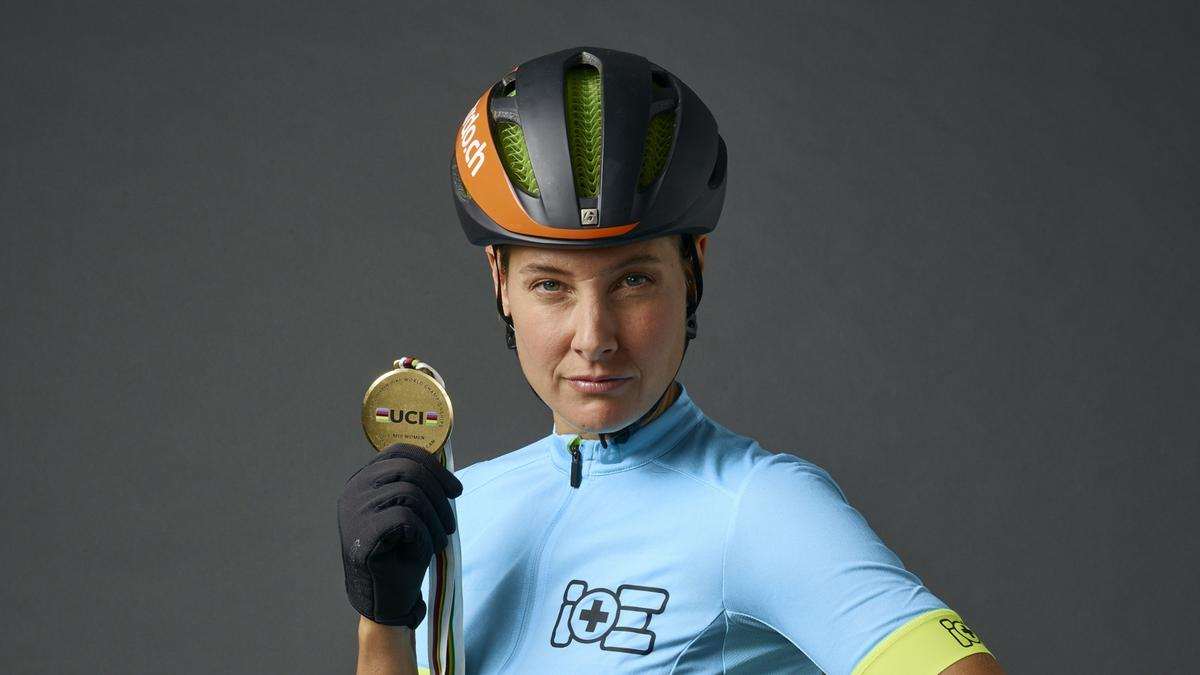
Nathalie Schneitter is the Expo Manager of Bike Days and an e-mountain bike racer from the very beginning. She will be one of the speakers at the Ride Congress on October 1, 2020.
Suitable Ride Spotguides
Note: This content has been automatically translated from German. Please report any incorrect translations.