

Inflatable Protection: Airbags Are Now Taking the Mountain Biking World by Storm
From the Car to the Body
Airbags are not a new invention. The first patents for inflatable restraint systems date back to the 1950s, but they didn’t make their breakthrough in the automotive industry until decades later. Today, they are a given in cars, and the basic concept has long since found its way into other areas of application.
Instead of providing protection only inside a vehicle, airbags now protect the body directly. Sensors constantly monitor movement and acceleration. If the electronic system detects a fall, an air cushion inflates within milliseconds. The key advantage: While traditional protective gear must be worn at all times, an airbag only transforms into a large-area protective shield when it is actually needed.
Motorcycles and skiing lead the way
Development has progressed particularly far in motorcycle racing. Alpinestars has been collecting data from road racing since 2003 and introduced its Tech-Air Race System to MotoGP in 2009. Since 2018, airbags have been mandatory for riders there. They must protect at least the shoulders and collarbone.
Alpine skiing has followed suit. In the World Cup, airbags are mandatory in the high-speed disciplines of downhill and super-G. Current FIS specifications also require that the airbag system include a back protector that meets European standards. What once began as an exotic add-on has thus become an integral part of protective gear.
Downhill Discovers the Airbag
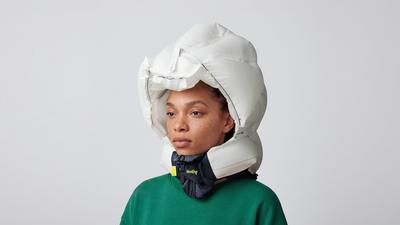
Now this development is reaching the world of mountain bike racing. Dainese has been working on an airbag solution for downhill racing for some time now. Other concepts also show where the industry is headed. The Swedish company Airforestry, for example, presented a helmet concept with inflatable elements, while Aerobag’s system transforms an inconspicuous top into a protective vest within milliseconds in the event of a crash.
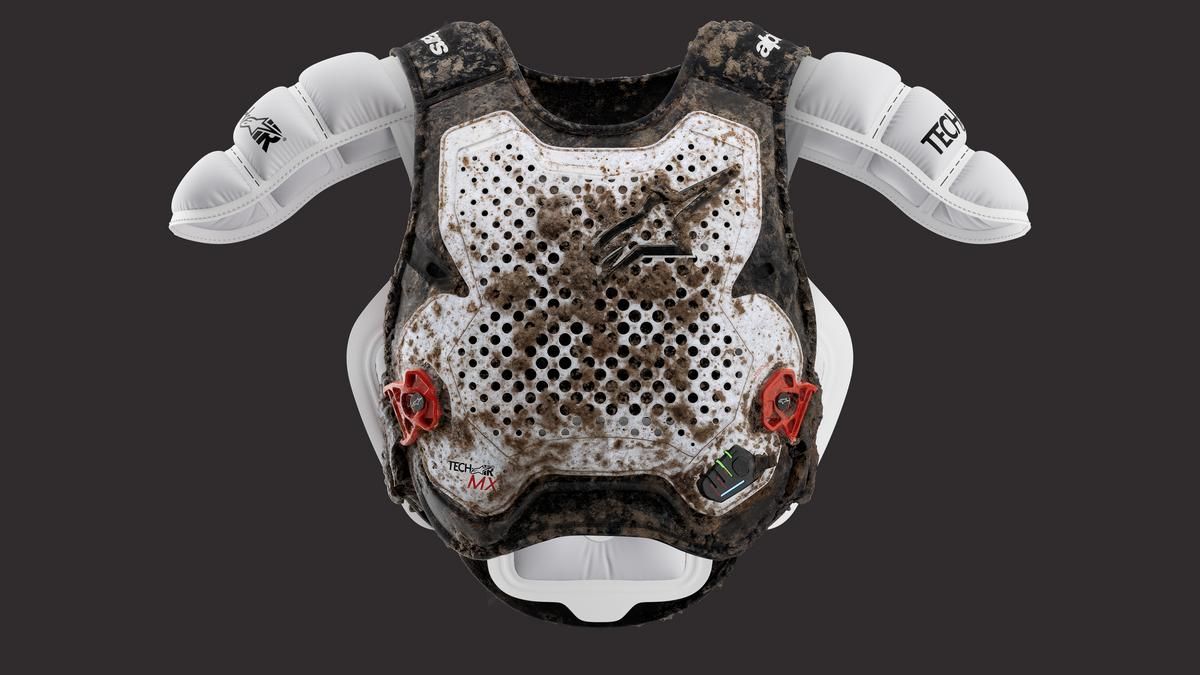
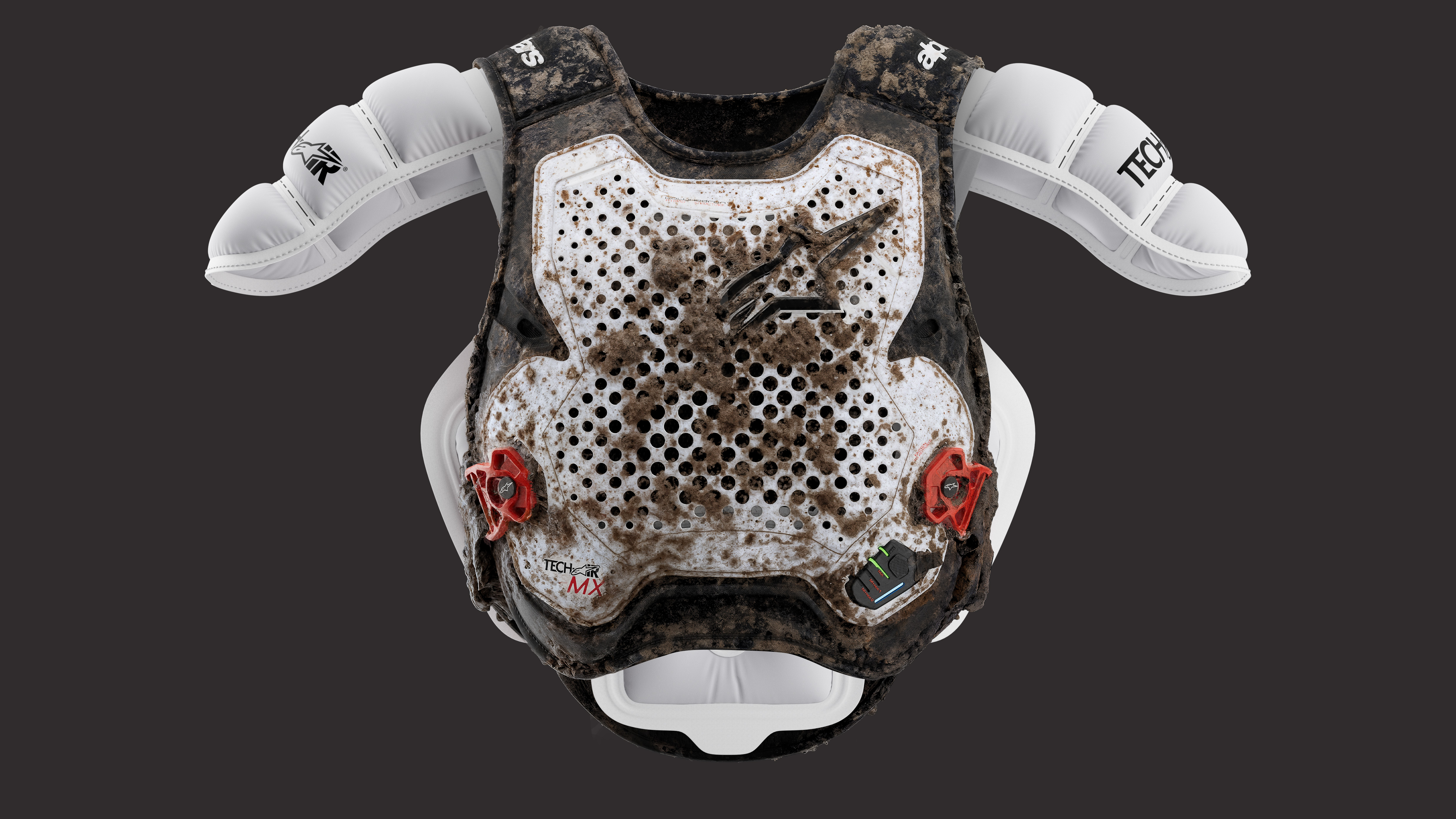
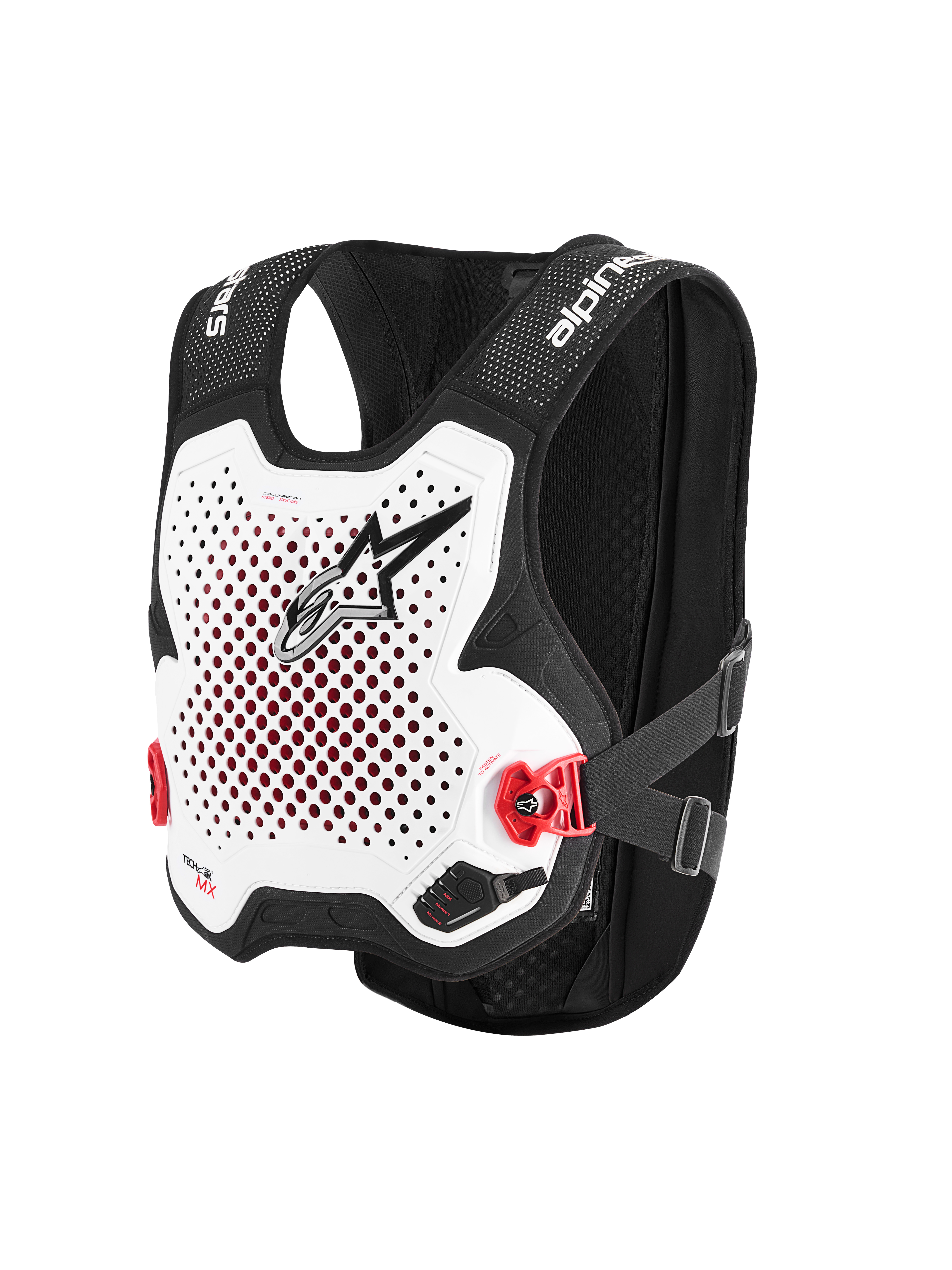
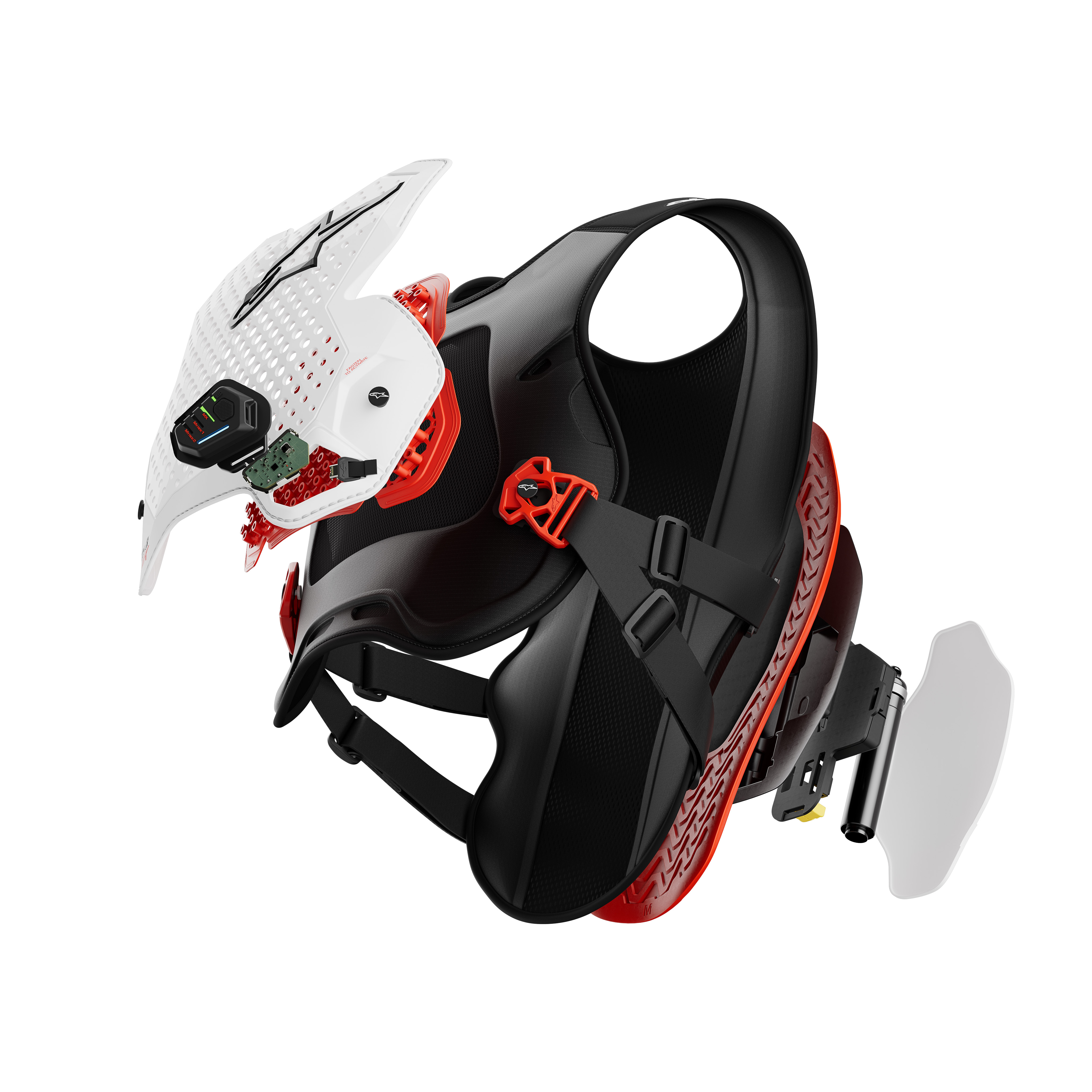
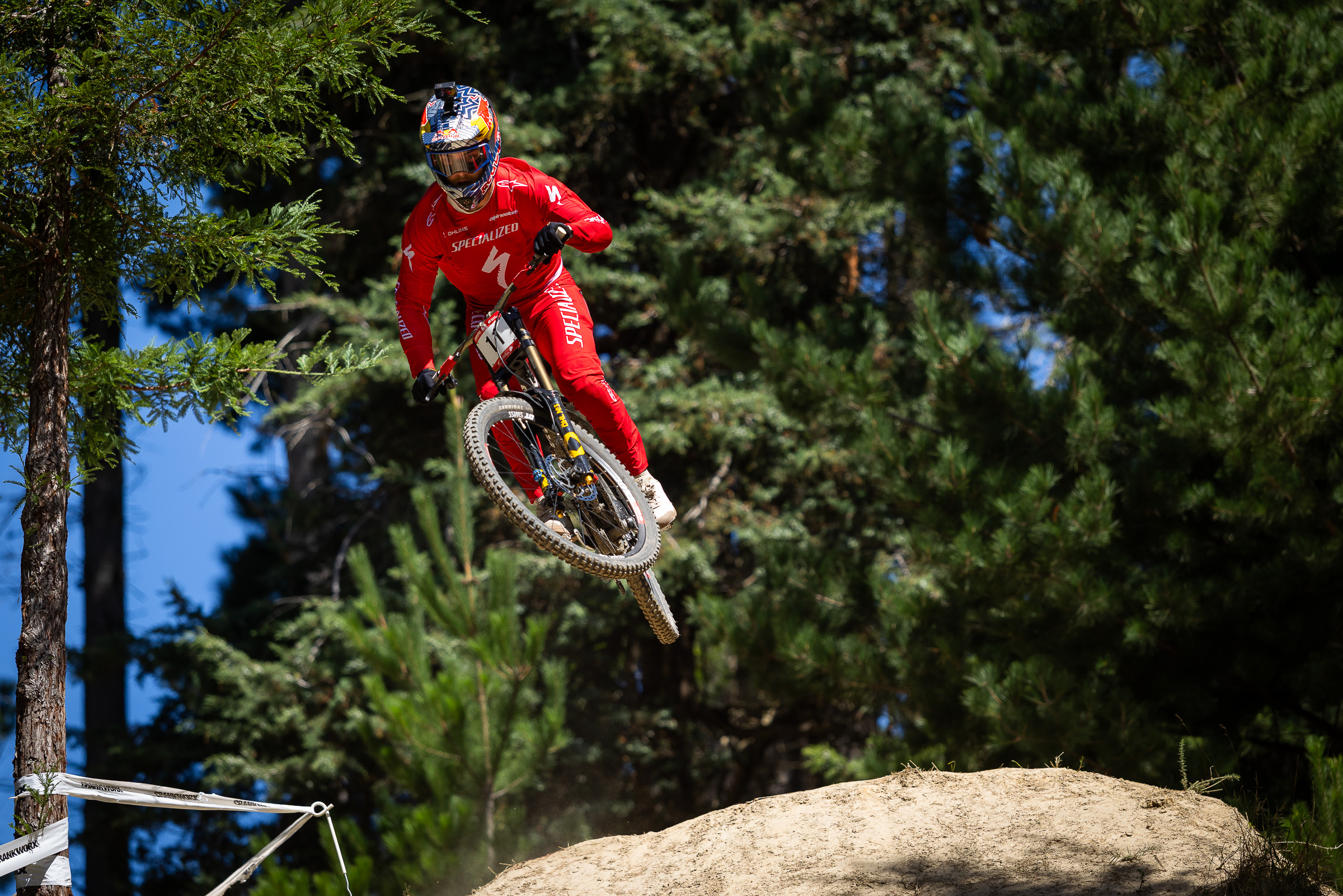
Alpinestars is now taking the most concrete step yet. The Italian manufacturer has equipped its Tech-Air MX with its own downhill algorithm. Data from professional mountain bikers has been collected for this purpose since 2022. Riders such as Loïc Bruni and Jordan Williams have already used the system in competition.
Alpinestars detects the fall
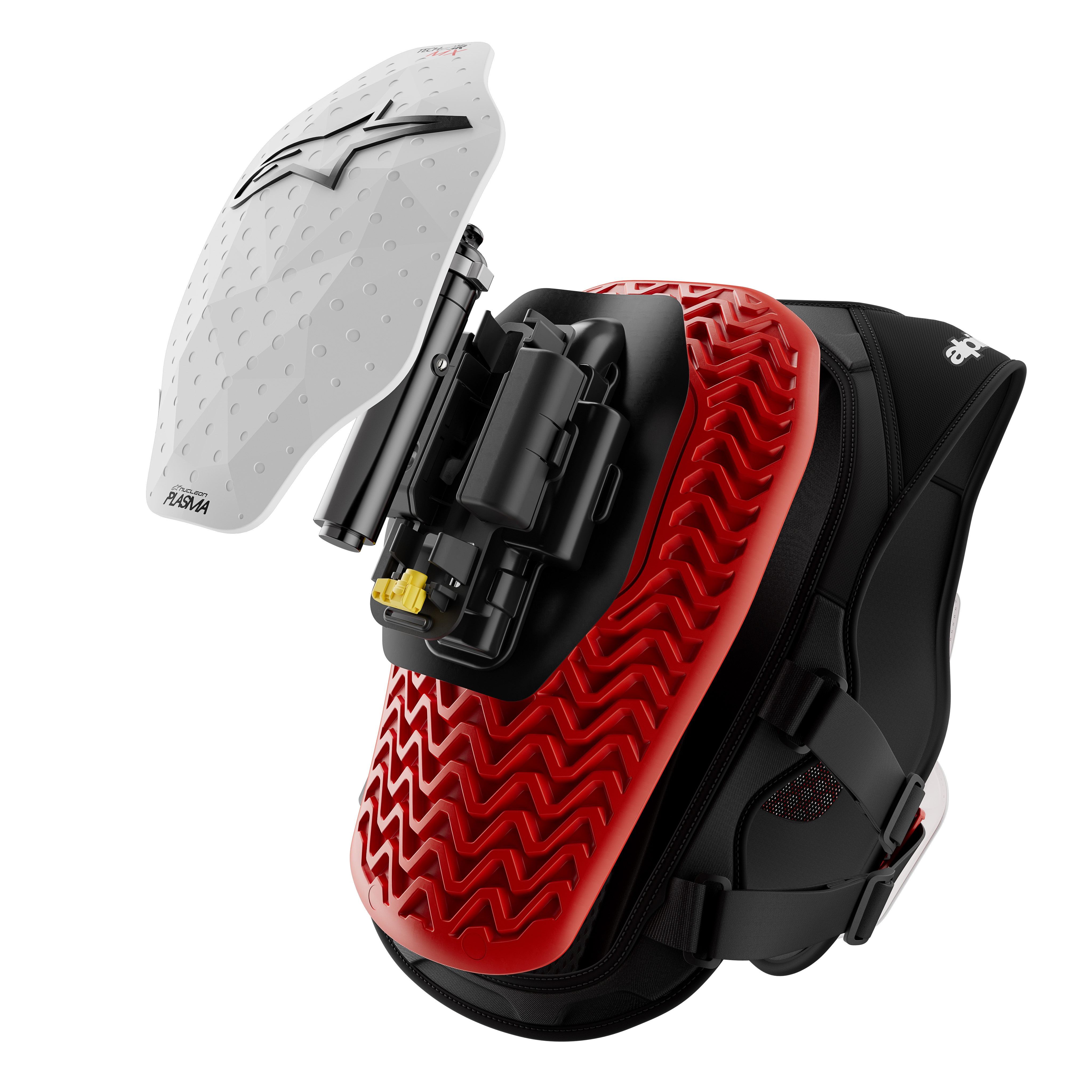
The Tech-Air MX operates completely autonomously. Six sensors, including a three-axis accelerometer and a three-axis gyroscope, analyze the rider’s movements several hundred times per second. The new algorithm is designed to recognize typical downhill situations: loss of control, instability caused by the terrain, or movement patterns that indicate an imminent impact.
If the system detects a fall, the airbag deploys within approximately 32 to 45 milliseconds, depending on the size of the protector. It protects the shoulders, chest, and back. Alpinestars claims up to an 82 percent reduction in transmitted impact energy compared to a conventional passive chest protector.
The downhill mode is downloaded to the system via the Tech-Air app. According to the manufacturer, the battery lasts up to 30 hours. After deployment, the gas cartridge can be replaced; up to six deployments are possible before servicing is required, provided the airbag remains undamaged. The chest and back also feature passive protectors.
Time for a Mandate?
This, however, raises a fundamental question. While downhill racing is getting faster and faster and the equipment is becoming more and more advanced, the rules regarding body protection are lagging behind. Upper-body protectors are still not generally required in UCI downhill.
This stands in increasing contrast to other high-speed sports. MotoGP has required airbags since 2018, and the Alpine Ski World Cup now does as well. In those sports, organizers didn’t wait for every athlete to voluntarily adopt additional protective gear; instead, they defined technical standards and created rules based on them.
This is precisely the opportunity that now presents itself in downhill racing as well. Systems from Dainese, Alpinestars, and other manufacturers demonstrate that airbags are making the leap from experimental concept to practical product. Reliability, comfort, and practicality still need to be proven over the long term. But if the technology proves itself, the UCI should not only consider making back protectors mandatory. It could take the next step right away and declare airbags the standard in the Downhill World Cup.
Further content on this article


Note: This content has been automatically translated from German. Please report any incorrect translations.