

Unrecognizable: The Rocky Mountain Altitude
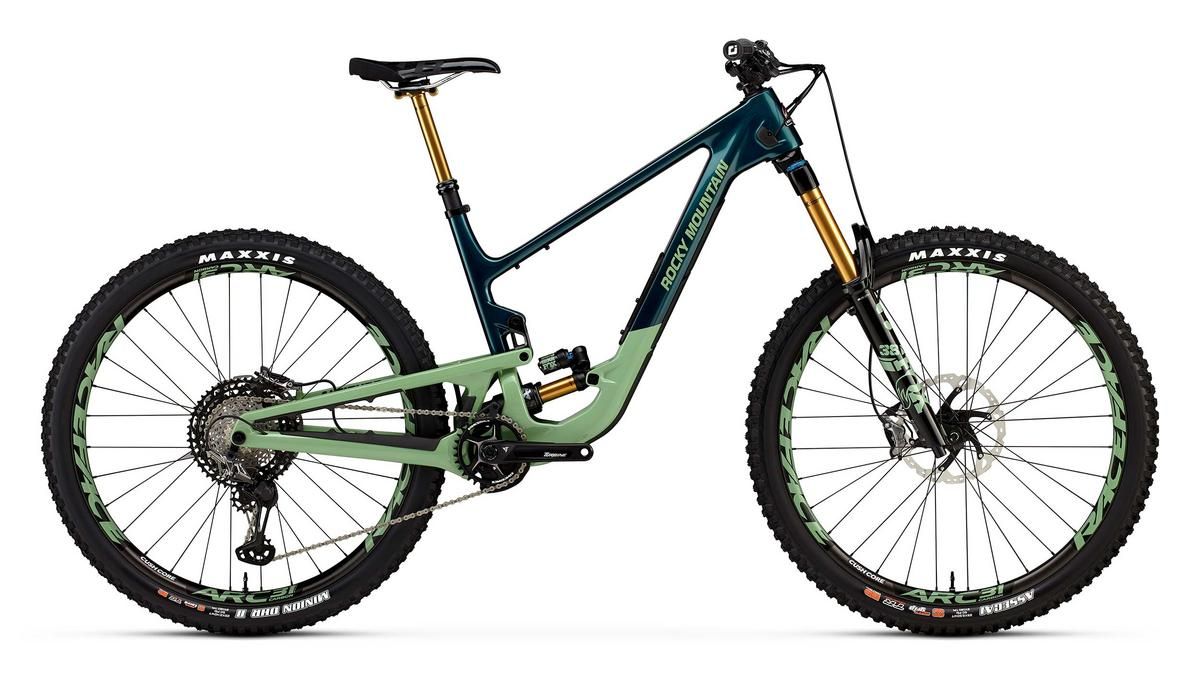
Today, many rear triangles are almost indistinguishable for laypeople - and even for experts in the field. It almost always looks the same: The shock is located under the top tube, the pivot point between the chainstay and seatstay is located just in front of the rear wheel axle, and a rocker fixed to the top tube and seatstay connects the shock to the top tube.
Until now, Rocky Mountain's Altitude also featured this design. But for the new Altitude, the Canadians have left no stone unturned: The shock slides down to the bottom bracket and the rear triangle is given a virtual pivot point. This results in a low center of gravity and, according to Rocky Mountain, a linear suspension curve, a good response to small impacts and increased resistance to bottoming out.
The LC2R (Low Centre Counter Rotating) suspension format was first introduced by Rocky Mountain on the Slayer in 2006 and the Flatline downhill bike was also equipped with it from 2008.
With 160 millimetres of rear suspension travel and 170 millimetres at the front, as well as pre-mounted Cushcores in the Minion tires, the bike category is also crystal clear: Enduro is the Altitude's métier. Thanks to a flipchip, the bike can also be set up as a mullet for frame sizes Medium to X-Large without having to replace a mount. The frame size Small rolls onto the trails in 27.5" format. Of course, 29er wheels are also available at the front and rear of the frame sizes M to XL.
Luckily, no cables and outer sleeves pass through the headset, but are routed into the frame in the head tube. Also on board - only on the carbon models - is the storage compartment, which the Canadians call PenaltyBox 2.0.


Further content on this article

Note: This content has been automatically translated from German. Please report any incorrect translations.