

Piz Arina

Description
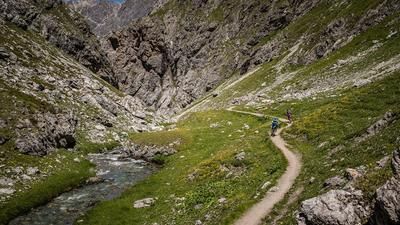
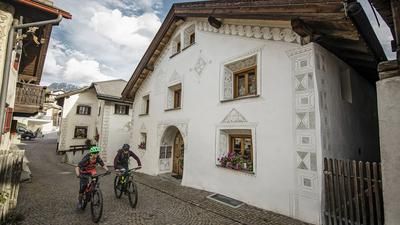
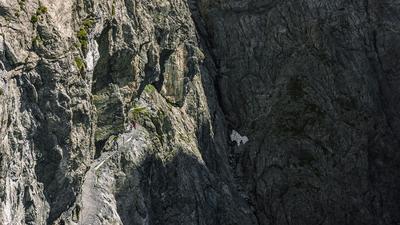
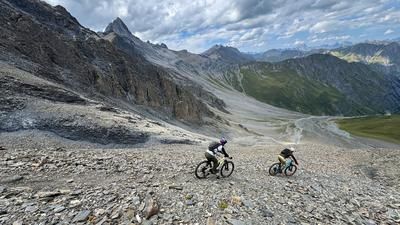
The starting point of the tour to Piz Arina is Vnà. You can get here from Scuol via Ramosch by post bus, although only three bikes can be transported on the rear rack on the line from Ramosch to Vnà. From Vnà, you climb on a pleasantly ascending gravel road to Alp Discholas. The route then becomes steeper and somewhat rougher, but is easy to ride up to Alp Marangun. For the remaining 560 vertical meters, you have to carry your bike. The trail is steep, barely visible in sections and rides in this way up to Fuorcla Pradatsch below the summit. This last section is the key point of the tour, a narrow rocky passage. It is important not to be alone here so that you can pull each other's bikes up. This section also requires good surefootedness and experience in alpine terrain. Once the passage has been mastered, the summit of Piz Arina with its sensational panoramic view over the entire Lower Engadine is quickly reached.
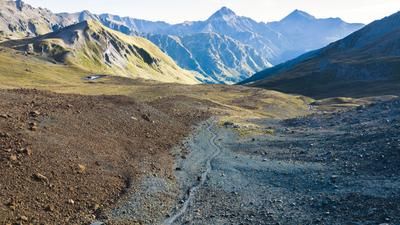
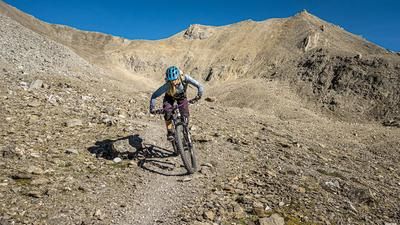
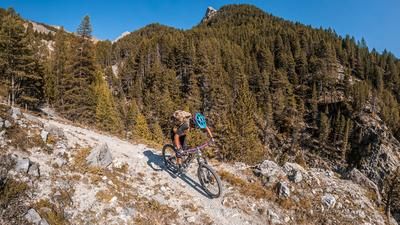
The descent begins directly at the summit cross, the first few meters give a foretaste of what is to come: an alpine, challenging single trail. Good riders will have a great time; the path first winds through rocky terrain, later through a sea of alpine roses. Finally, you reach a gravel road far below and follow it downhill for a good stretch until, shortly before Vnà, a path turns off to the right in the direction of Val Sinestra. This is the feeder to the final trail that eventually rides down to Ramosch. Along the Inn, you finally reach Scuol again through the valley floor.
Map & GPX-Track
The map is only available to Ride subscribers.
The Ride-Subscription is available at ride-mtb.com/abo
.
Details of the tour
31 km
1390 m
1795 m
1109 above sea level
2804 above sea level
1 day
Vnà
Scuol
2066
not suitable
More information
More tours nearby








User comments (1)

About the author: Thomas Giger
Note: This content has been automatically translated from German. Please report any incorrect translations.
Beautiful tour - but still has snow in it even after a winter with little snow like last June. Perhaps you should only go on this tour in July if you want to avoid the snow.
The carrying passage requires a bit of suffering, but is rewarded with a crisp, alpine descent.